Pages

Saturday, July 30, 2011

*Revising, Rewriting*


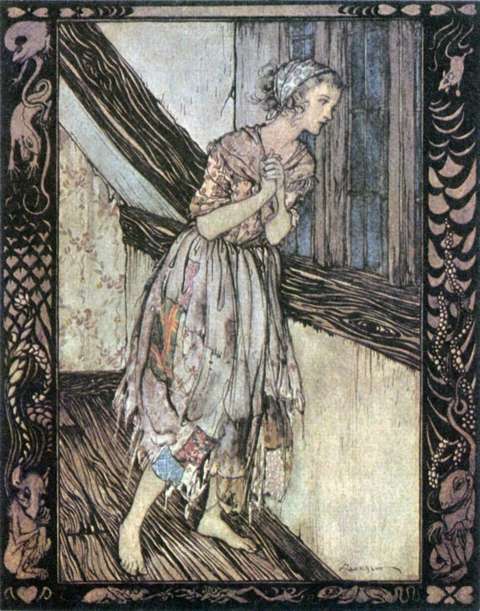
I am figuring out that I am that kind of poet who needs to figure out the political thrust and the sociological implications of the different elements of the craft and the content before moving a project forward. For years, I have been ashamed of this character of mine. As if I am a lesser poet because of it. Now, I don't think as much of the "lesser" part. Instead, what has become important is the element of getting the work done. So, now I have retrieved my Cinderella's step-sister poems again. In the first version, that was published in Pratilipi, I had reclaimed the figure of the step-sister, given her a voice, and I would even say, it was a feminist voice. Now, that I read it, I think, there are some good lines there. Some good images. I like the overall tone, which is a combination of passion, anger and lots of bitterness. And, I was also trying to problematize homogenous, easy notions of sisterhood. The step-sister clearly feels that Cinderella has been complicit with her own silencing. Cinderella, for me, became the symbol of a certain kind of neo-liberal feminism, which is trying to find its liberation within the consumer culture, commodified ethos. (Yes, I do think, Cinderella provides a wonderful conduit to rewrite neoliberalism.)

When I turned in a somewhat rough draft of a manuscript to KRA, I had modified these series of poems a lot. I had included Cinderella's voice within it, I have strengthened the step-sister's voice, and made it more specific. There was an implicit assumption running through the poems in this particular version --- the step-sis is a folklorist herself. She can break her deal with the Grimms Brothers, precisely because she is a folklorist herself, and does not need male folklorists who will tell her story. I have suggested this implicitly, but didn't really expand on it. Now that I am reading through these poems, I think, this figure of the folklorist needs to be developed and spelled out a lot more in these poems. The implicitness was a starting-point, but it won't work, until and unless the poems delve a little bit more into the politics of a woman becoming a folklorist. And how folklore as a discipline brings up all sorts of problems. I am hoping to finish giving the whole series a read within the next two or three days, and then I will have to think about the re-writing part. But at this point, I am excited just to have figured this out.

Thursday, July 28, 2011

::"I Don't Like Poetry"::


In the past two weeks, I have heard from two (no, three) young friends of mine, "I don't like poetry." I should have felt defensive, I guess. But I didn't. Probably because I could relate to that feeling. I loved to read, and by the time I was college-age, I was fairly well-read. Yet, I didn't sign up for an English major, inspite of getting in at Jadavpur's famous program, because I couldn't stand the thought of going through pages and pages of Romantic poetry. But then, it wasn't that I didn't like any poetry-- I spend all my allowance to buy collections by Pablo Neruda. This was in eleventh grade. I liked Mayakovosky, and a lot of the Bengali poetry I found in my parents' bookshelves. But it's also true, there were a huge number of poets whose work I didn't necessarily like or understand. The funny thing is, now I LOVE Romantic poets. A lot of the poets I dismissed then, I now love. Or, think of as plain problematic. I mean, there is no middle-ground here. Now, when I think back on the process of what brought me back to poetry, I would say, it's a combination of my increasing politicization, my conviction that art plays an extremely important role in building up a liberated world (and not just in a propagandist kind of a way), and my last twelve years of serious engagement with literature. A lot of that engagement did happen within academic spaces, but not all of it. For example, I have never studied poetry academically. But I do think, the kind of academic work I have done with prose, has helped me to think about poetry in more complex terms. The thing is, I understand the world of the Romantics much better now precisely because I am more familiar with the Euro-American social histories of those times. I have a better idea about the ideological, political, aesthetic, philosophical forces the Romantics were engaging with. Yes, it's precisely a better grasp of the social, cultural and intellectual history of the eighteenth and nineteenth centuries that leads me to appreciate Romantic poetry better. But the kind of poetry-teaching I encountered when I was a teenager, excluded precisely these complexities. Consequently, I had no yardstick or context to think through the poems. I guess, this is precisely the kind of literature pedagogy that Gauri Vishwanathan writes about in her book Masks of Conquest. The pedagogy that came about from the cultural/education/ideological projects of the empire. So, I would say, at the cost of sounding reductionist, one of the ways in which poetry can be democratized is by engaging more and more with the sociology and social history of the form itself. By showing how poetry is not something that stands apart from the rest of the society and world, but is one way of writing that world. And therefore, inextricably related to the social, political, other art forms of its times.

Wednesday, July 27, 2011

::Life Now::

Writing...er...Dissertation

Drinking

Reading


Monday, July 25, 2011

::Post-Workshop Thoughts::

The last five days were busy. I now have a lot to process: my trip to DC, the workshop I did with the youth. Ideally, I would have liked the workshop to be longer. It's hard to fit in discussions of a cultural/social history with discussions of art-forms and then combine the two with some kind of writing exercise--- all within 90 minutes. What would have worked better was a three-day workshop where I could divide up the stuff into little bits and pieces. Something like

DAY 1: Discussions about food, cultural/social politics of it

DAY 2: Reading and discussing the poems together

DAY 3: Writing, critiquing and reading aloud each others' poems

But I didn't have that kind of luxury. Neither did the organizers. So, after I was done facilitating the workshop, I myself felt overwhelmed. And it made me think, how everything, and especially art-making is a process. It takes time. It needs time. One of the things that came up during the discussion was, how poetry is "abstract'. One of the workshop-participants categorically stated, I don't like poetry. This is something I would have definitely liked to explore more within the space of the workshop. One of the things that I have been thinking about ever since, I had no time/opportunity to talk to the workshop-participants about their familiarity with poetry or even literature. Is poetry something they relate to at all? If they were given a choice to choose their genres for the workshop, how many of them would have chosen poetry? What would have prompted their choices? I would have loved to know. So, I was also thinking, how very very logistic concerns like time, our scanty resources often end up reproducing the very myths we are trying to dispel. When I sign up for a poetry workshop, I sign up for it because I want to work on my poems. I have chosen the form as my genre, I want to get better at it, and hence my decision to sign up for the workshop. But the youth I worked with, did not necessarily sign up for a poetry workshop. They signed up for a three-day event where they would interact with their fellow South Asians on things. My workshop was something the organizers chose to present to them. So, in spite of all the good intentions and best of efforts, when working within structures like this one, we cannot really avoid centralized decisions.

Now having said that, I would also say, I am happy that I got a chance to do what I did. Maybe some of them will think about poetry as a form of self-expression now. Maybe some of them will take to writing it. Maybe some of them will begin to read it. And that's why, I am in favor of doing workshops in all kinds of settings. I think, it's important to do writing/poetry workshops in settings where the emphasis is clearly not on poetry or writing or even art. Because, I think, something about conducting a workshop in such so-called non-literary/non-artsy setting democratizes the very process of art-production. It demystifies art-forms and encourages people who wouldn't have ever thought about these forms to engage with them. It's especially important when the form is something like poetry--a form which lends itself to abstraction, and therefore, also to elitist obscurantism.

Thursday, July 14, 2011

::Imperial/Racial Privilege And Workshops::


There was a time today when I was angry. It wasn't a personal sort of anger, but anger which emerges from the helplessness of someone who is trying in her own way to be a better writer. Now, I will record the same questions I was asking myself this afternoon:

a. Am I responsible as a writer for my readers' lack of sociological knowledge?

b. I am not writing an ethnography of my neighborhood in Kolkata. I am writing stories--damn it. So, no, I am not going to explain the "social and cultural differences." Yes, someone said that in my fucking workshop-- Explain the social and cultural differences! I am pissed, because I read around 50 books every year. Almost 60% of them are on contexts into which I wasn't born. No, I don't expect any of the writers to "explain" to me the "social and cultural differences." When I feel like I don't know the history, I do the work. Period. So, this very assumption that it is the responsibility of the non-American writer to explain to the American reader what's going on, the "social and the cultural differences", clearly reeks of an imperial, white privilege. There isn't any other way to think about it.

c. A lot of the feedback I get from the workshops want me to do the work for my readers. They want me to fill in the gaps in their sociological/historical/anthropological knowledge. So, I have to do a lot of separating the wheat from the chaff, if I still want to get some benefits from the workshopping.

d. This makes me mad because the white and/or American writers can throw in a story to the group, sit back and not have to ever think of how "social and cultural differences" are working within their stories.

e. I don't bring up these issues inside the workshops. Why? Because I know none of these people are being deliberately racist and/or imperialist. More importantly, none of them wants to think of himself/herself as such. So my pointing these things out will cause them to have a knee-jerk reaction, they will stop commenting on my stories frequently. I don't want that to happen. The thing is, I have signed up for these workshops so that I can learn. I am not yet in a space as a writer to take up these issues. (Yet, I am, no? Otherwise, I wouldn't be writing this post.But I am not ready to take them up publicly yet.)

f. One would think, after the work of Gloria Anzaldua et al., this country, especially those who want to write, will have a better awareness of these kinds of representational/cultural politics. Nope! No such luck! Seems like every one of us colored folks will have to launch and plunge through our individual struggle!

Now that I have vented, and written this post, I need to go back to the actual work: writing my poems and stories. Maybe some day I will be able to talk about these things more explicitly. But now is not the time! Inshallah!

Wednesday, July 13, 2011

.Facilitating Youth Workshop.

I am going to Washington DC in a couple of weeks to facilitate a writing-workshop with South Asian youth. I do not have a whole lot of time for the workshop-- only 75 minutes. Now, it's hard to do anything remarkable during that time. What can be done though, is to open a door or two, and then hope that the young people in the workshop will pick it up. There is no substitution for long-term work, and none of the fruits of a long-term project can be attained during a 75 minute workshop. So far, I have thought of centering the workshop on food.

In my experience, most young people in USA do not necessarily think of food as something political. Some brighter ones might think about it as cultural, but rarely have I met with kiddos who think of food as political. Consequently, they do not have the knee-jerk reaction to it in the same way they have to something like race or class, which they have always associated with politics. These young people I will be workshopping with, are more socially conscious. A lot of them are already involved with community projects. So, I do not think apolitics is going to be an issue. What is going to be an issue though, is to restrict myself. As a workshop facilitator, I need to have clear sense of goals. A 75 min workshop cannot be both a seminar on food-justice issues and a writing workshop. For that to happen, we need at least a month of regular meetings. So, I am trying to remind myself, this is primarily a writing workshop. And I am not someone who is "cool" in that edgy kind of a way. When I talk about writing, I talk about in a very old-style way. Why? Because I think, the book, the printed page and the very act of physical writing can (still) give us things which other art/media forms cannot. So, one of the things I will try to do is to, encourage the young people I will meet to be more cognizant of the form "book" as a whole--not an e-book or a kindle. But an actual paper book which one can grab between one's fingers. I will update more on this workshop as I go along! But I am EXCITED!

Tuesday, July 12, 2011

~Why This Blog~

I am not very good in writing reviews of poetry collections, short-story collections or novels. My LONG training in academic literary criticism has taught me to think through words, plots, themes, characters in a relatively more expansive way than the usual review would permit. That's why, this blog space is important for me. Because it allows me to articulate my thoughts about writing and literature in a very different way from my formal academic training. While I wouldn't mind anyone else reading this blog, and there are some close friends of mine who read this blog, this is a space primarily for me and my own self. This is a space where I write to articulate ideas, thoughts, reflections, concerns. Maybe some day I won't feel the need for this space in the same way. And then I won't write here anymore. But for now, here I am, scribbling some fragments right before going to bed.