Pages

Showing posts with label Poetics. Show all posts

Monday, August 15, 2011

{Ongoing Thoughts About Femininity, Motherhood and Women's Poetry}


The poems about daughterhood I have written in the recent past, and which I have begun to send out recently, are generally more appreciated by men than by women. I didn't think about this part of the reception when I was writing them. It is only recently that I have come to recognize this aspect of the reception of my own work. I am still processing it, and I don't have any well-developed theorization about it.

But I have my suspicions. I think, men and women are taught/socialized to think about inter-generational relationships differently. Men think conflict as an integral element of inter-generational relationships. Women think of them more in terms of nurturing. Coming-of-age for girls often translates into accommodating themselves into the imperatives of the roles of nurturers and care-givers. Personally, I don't think these are either/or realities. Both conflict and nurturing can co-exist within a particular relationship. In fact, I would say, most relationships, which move beyond a superficial exchange of niceties, involve both. Where the whole thing gets more complicated is the place where our inter-generational experiences get constructed in specific ways by the societies and cultures we live in.

By that token, women are not expected to write about conflicts, the anger they feel for their mothers. Instead, mother-poems, like grandmother-poems, are supposed to be all about nostalgia-- of finding that space of purity where mother and daughter come to share bonds. Of course, there are plenty of women poets who have written against that expectation, but in my experience, it still throws people off, and especially women readers, when they encounter a woman writing about conflict in their relationship with the mother. It is as if the denial of the mother would come to an essential denial of the writing woman's own femininity. And this is something, I plan to write about very soon, it's still very hard for women writers (and women in general) to lay claim to their own anger. The mainstream women's poetry in this country (written mostly by white women) bears important testimony to that. I can say the same thing about Bengali women's poetry too. But that's going to be a whole different post.

Tuesday, April 5, 2011

Where Am I Going With This Project?

I have been working for the last few days on this project. It is not necessarily new. Originally, I had included it as a section in my manuscript which I had compiled for JHG's summer workshop. Someone in the workshop suggested that this can be a chapbook in itself. I had kept the thought locked in some compartment of my head, but didn't really think about it much. Because the poems, I guess, seemed to be too personal, written from an I-voice, and yes, angry and whiny. But then, I began to re-visit the project again. Revised some poems for the UCLA workshop. The folks there generally liked them. And I, too, was looking for a "manageable" book/chapbook-length project that I can lift off the ground while writing the dissertation. I began to work on it again. In the last month or so, I have written some new poems aimed exclusively for this project. I must say, the poems that I have written are not exactly in my comfort-zone. I am writing them, I am trying hard here, but I am still afraid. So what are the fears that I have for this project:

1. the poems will be read as a sort of vulgar autobiographical exercise

2. the earlier poems and the ones I am writing now are different in their essential aesthetics. That can mean both--it can be a source of strength, or a source of weakness. I am not sure how it would look in this particular project.

3. These poems are based on family dynamics. Mother-daughter, father-daughter relationships. The daughter's character/voice looms large here. She is the one who is doing the "seeing", the "narrating", the "writing." There are poems which are also on the conjugal relationships of the parents. Some on the mother's relationship to her parents. But these are all narrated by the daughter. So, the daughter's voice acts as a filter. Now, here comes my biggest fear. Will these poems mean anything to anyone other than me? What it is that I am trying to reconstruct here? Obviously, the easy answer is "the personal is political." But a lot of the American poetry, especially women's poetry I am reading these days, seems to be all personal, and no political. There are lots of re-countings of everyday details of the persona-narrator's life, without necessarily reflecting on the larger implications. Without necessarily trying to answer the "so what" question.(This demands a post in itself.) I am not too interested in writing a book of poems which would sound/read like that. So, yes, I am worried about the ideological/political implications of the work I am doing here.

But also, I don't want to stop here. I want to go on, and see where this leads me. Maybe, once I am done with the first draft, I will begin to have a better sense of it? The thing is, I know so many people who have let their fears of "implications", "ideological value" , "political relevance" of their work stop themselves midway in the project, that I don't want to go down that same path. So, let's see.

Tuesday, March 22, 2011

Writing in an "I" Voice

I have been afraid of writing in first person, unless it's a persona poem. So far I had defined persona poem rather narrowly: I would take characters from existing stories, myths, tales and would try to write in their voice. But I have largely avoided writing in an "I" voice otherwise. Because I was scared that they would be read as confessional and autobiographical. Whatever experience I attribute to the "I" persona of the poem will be attributed to me. I think, there is a strong trend to read any poem written by a woman in "I" voice as autobiographical. But, it's especially true about the poems produced by women of color in this country. The "I" in the poem, most of the times, get read anthropologically, and I have resisted that. Now, I am in a workshop which requires that I "adopt" an "I" persona for the length of the class (ten weeks) and write from the perspective of that persona. It's challenging, precisely because this is something I have avoided so far. We still haven't progressed enough for me to generate detailed comments on the process, but I have signed up for the challenge. Let's see where it takes me!

Wednesday, March 9, 2011

Reflections on Poetic Language

From Dobyns' chapter “Metaphor”:


A metaphor can exist to heighten just a small part of the poem or it can be the entire poem. To be successful, however, the metaphor must be functional rather than decorative, meaning it has to further the general intent of the poem and it must be necessary to the reader's understanding and involvement in the poem. Any decorative use of metaphor is basically rhetorical; the author is trying to convince the reader by what amounts to technical effects rather than by content.

Then, he writes:


Image without object is evocative but it is dead end. The image has no function without the object, while the purpose of the metaphor is to draw attention to the relationship between its parts.

Even a symbol must give a sense of what it symbolizes.

We go to art partly to learn about the world. In a metaphor, that world is represented by the object, while the comparison with the image gives us a new sense of that world.


Like Dobyns, I am not someone who believes in empty metaphors, in language games and images which sound and read and feel merely beautiful. I have blogged about it before, but I will state it here again, just so we have a context for this post: I don't believe beautiful language or grasp over the technicalities of a language can replace a complicated historical eye and a sociological imagination. Now, having stated that, it is interesting how in the workshop I am in right now, one of the things that I have been encountering is the teacher's feeling that I get drawn into beautiful language-play and images, without necessarily thinking about their meaning and content. She has been encouraging me to “clarify my meaning rather than obfuscating my meaning.” For example, these were the lines I had:

She had a name for me.


Long before, I, heaviness-wrapped,

knifed through her


entrails

innards

skin of her thigh


a presence of my own


a sting in red, green, blue and brown.


Now, this is a revised version of a poem, and the earlier version was like this:


She had a name for me. Long before she actually gave me birth.

A different one from that which the Head of the Clan announced

in the feast, and had later scrivened in the pages of the little maroon

book.


Her comment was:


We have lost the word “birth” in this description.


Now, replacing the word “birth” with images was a conscious choice. The word “birth” seemed too direct to me, not expressing enough about the complexities of the actual birthing process. So, I was trying to find something which would express the physical pain of the birthing process itself, the actual physical discomfort, the way a child is a responsibility, the gendered nature of that very responsibility, and how becoming a mother has historically meant loss of opportunities for women. Hence, the images “heaviness-wrapped”, of the child literally knifing through her mother's body. But then, a child is also a source of joy. Hence, the colors—green, blue and red. And why “sting”? Because this is a poem about a daughter's disappointment about her mother's acceptance of silence. This is not a poem that celebrates in nostalgic terms the mother-daughter relationship. It is not glorifying motherhood, so to say. And the daughter's criticism transforms her literally into a pest, seen from the mother's perspective. Hence, the use of the “sting.” In other words, I had used the images to convey the conflict-ridden nature of this relationship, the contradictory feelings about the birthing process. I don't think the word “birth” could have done it for me. In the first version, I was using that sentence more as a placeholder than anything else. And I don't know, my feeling is that, the images are specific enough to remind the reader that it is birth we are talking about: the innards, entrails, and especially the reference to the thigh.

In other words, the “object” of this passage is the birthing process.

Now, I do want to make it “clear” for the reader. But I don't want my poems to work as guide-books for my readers. I want them to work hard, ask questions aggressively, think through each of the images and feel them. So, I think, once again, I am bumping here against a very different understanding of what a poem is supposed to do, and what's the role of metaphors. Yes, to be honest, I am someone who is attracted towards the abstract, the surreal, the magical in my metaphors. In other words, I want to push the limits of reality in my metaphors rather than reifying the everyday in a photographic way. And when I ask for feedback, I want to see, if the metaphors I am using are being effective in that endeavor. But I don't think I am willing to let go of the metaphor--the magical in the metaphor, the abstract in the metaphor—in that way.

Because it is in that abstraction, in that ability to reach the magical, the surreal that I see the political work of poetry.

Sunday, March 6, 2011

Dobyns' Court Jester


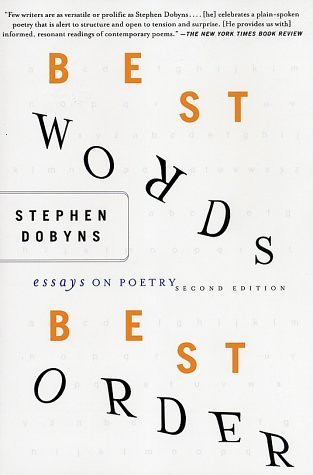
I am reading Stephen Dobyns' Best Words Best Orders: Essays on Poetry. I have long been looking for a book which would reflect on the process of writing poetry beyond the introductory stuff. It's not that they are bad, but personally, I don't have to work on pushing myself to sit down to write anymore. Neither does anyone else have to do the work of convincing me that in order to write, I need to read. Dobyns' book has been helpful so far. Although I have read only the first two chapters. One of the things he does in this chapter is to see the work of the poet through the figure of the court jester. Dobyns writes:

The jester laughs at the king, yet the jester himself has nothing. The dwarf reminds me of that mixture of gall and humility that one must have in order to write.

I agree whole-heartedly with the “gall and humility” part. For me, it translates to this strange combination of rejection, intellectual arrogance, hard work and plain old humility. I know I cannot really create what I want to create without rejecting a lot of stuff in this life-- social ideological and aesthetic. In fact, the way I think about it, the three are intertwined. I need to have the arrogance in me to stay true to my decisions, to explain them to people without flinching. But rejection alone, or negation alone has never done it for anyone. It won't do for me either. So, there is this immense need to come back to the work-table every day, make myself a cup of tea or coffee, munch on a banana, and just write. Sometimes read. Take notes. Look up from what I am doing to think, to process, to figure out more. Needless to say, I cannot really stick to this schedule of hard-work until and unless I also have an open mind to critiques and criticisms. The essential knowledge that whatever I am doing is nothing compared to what can be done. I am not writing about accepting all criticisms blindly, but there is a need to take all criticisms seriously, to think through them, and then reject it with a certain kind of intellectual modesty. As I am learning, criticisms/critiques are also ideological, historical and cultural in their very basic nature. So, I cannot really take them at their face-value. But at the same time, they deserve time and thought, a seriousness of consideration.

Anyways, what is disturbing me a little bit is Dobyns' attempt to see the court jester as having nothing. Of course, the jester has something very important-- the access to the royal court. His work, as I see it, is more of subverting the norms of the monarchy while staying within it, while continuing to enjoy its privileges. And there is a certain kind of utility to it. But what about the artists who prefer to stay away from the court altogether? Who sings and tells stories to people who will never get to see the court? I am not saying, that the two spheres are two air-tight containers, for, it's often that one makes way for oneself inside the court through singing to people. In the same way, there might be poets and story-tellers who make the conscious choice to be one or the other. So, to put it in a more rounded kind of a way, what relationship a poet or artist or story-teller chooses to have with the court, it all boils down to the specific context. But what I am trying to say that, it is symptomatic that Dobyns begins his book with this particular figure. I think, it reveals a lot about the politics of much of mainstream white, male (and sometimes women) American poets to the culture industry. It's all about trying to find one's space to laugh while staying within its logic. It's rarely about changing or moving beyond the rationality of a capital-centric culture-industry altogether.

Friday, March 4, 2011

Processing Feedback

One of the feedbacks I received in class about the revised version “Nomenclature” poem was that:

The newer version has more of a focus on the mother and even the generation before then. That takes me away from the narrator, who I really like and care about.

So I am thinking, this is a series about the conflicts of a mother-daughter relationship. The daughter, who is the narrator, does not stand as a fully autonomous figure (if there is ever such a thing). Instead, these are poems which explore the relationality. The daughter's stories are implicated in her perceptions of her mother, of her mother's stories, and in one or two cases, even the generation before. Am I bumping here against an American aesthetics which wants to see the narrator as a self-contained individual, and nothing but a self-contained individual? I don't see the contradiction between “caring” for the narrator and getting glimpses of the generations before her. If anything, it explores the narrator even more closely within a history and thus provides more space for the reader to know about her. Although I wasn't necessarily thinking about it that way, this poem, the entire series even, go against that notion of self-contained individual autonomy. Our stories are implicated in each other's and therein lies the complexity for me. It is specifically that complexity that I want to represent in my poems, stories, essays!

Sunday, February 20, 2011

A Poem and Some Thoughts About Poetic Language

My current poetry workshop is taught by a woman who is a spoken-word poet. I like to work with her, except that there are times when I think she is a little too literal. She believes in “bringing poetry from the coffee-shops to the sports bar.” Ideally, I agree with her. But I think, just from the kind of feedback she gives me, there might be some differences in the way we perceive the process. There might also be ways in which we differ in our perceptions of functions of poetry. I am not someone who believes in “dumbing down” my writings, whether creative or scholarly, for an audience. Yes, I am willing to provide contexts, and be reader/listener-friendly, but I also want the reader/listener to do the work.

Also, in my interactions with “ordinary folks”, I have found, there is an incredible amount of poetry/metaphor/magic in proverbs/sayings that they use to communicate wisdom. I believe, it's important for my poems to tap onto those reservoir of poetry/magic in everyday language, and also enrich it by adding my own metaphors. But when I am creating too literal work, because it needs to reach the masses, I am really banking upon some archaic presumption of popular literary tastes, rather than taking up the challenge of making poetry/literature be relevant to folks who are not going to be in academia, within literary circuits, amongst the blessed circles of the cultural elite. I don't have all the answers to all the questions this post will arise, but one thing I am convinced of: dumbing down in not the answer.

So, her suggestion to me is to write in more “concrete imageries.” One of the things I wrote in this poem was “rainbow-smelling oranges.” Her specific question to me was: do rainbows smell? In a literal world, perfectly magic-less, rational, it doesn't. But I see the work of poetry as stretching the limits of those perfectly rational experiences, to expand our so-called normal world of senses. So, when I write something like “rainbow-smelling”, I know perfectly well, rainbows do not smell. But I am inviting myself to imagine a rainbow that emits a smell. Simultaneously, I am also inviting my readers, to put pressures on their world of senses, and thereby, hopefully, consider the implications of what I am saying through that non-realistic imagery to think through the meaning I am trying to construct in these lines, in this poem.

The other imagery that got me in trouble with her was:

But on mornings I become
the leaf-sculpting caterpillar,
looking for the rhizome-shaped vein,


I am insistent.

Her question to me was, “What does this mean?” Well, imagine a caterpillar moving through leaves, the way it makes the leaves its habitat, the way it feeds of them, sculpting them into different shapes. Imagine those veins in the leaves. They are veins, but they also look like roots, hence the word “rhizomes.” Those veins do enable the plant to survive, and in an ironic kind of a way, they also resemble the roots in terms of their visual impact. And since this was a poem about what's often erased within a patrilineal culture, I thought, comparing the narrator of the poem to a caterpillar will make space to write about a young woman who is looking for ways to retrieve the erased/silenced women's histories.

Now, I am not sure if this is working fully or not. But the meaning is clear inside my own head. And in certain ways, I do agree that I am expecting my reader to think through it a little bit deeply. Am I expecting too much? Yes, I am. Why should it be different? I respect my readers, and their abilities to cull meaning from the worlds and words around.


Monday, January 3, 2011

The Poem Sequence II

I have finally finished the sequence of poems I had been trying to write on the history of reception of the fairy-tales. Today I need to type them and save them as files in my computer. What I realized while writing this sequence are:

1. I am trying to problematize the exoticization of "folk-poetics" that has been an integral part of an older process of male, bourgeois class-formation in nineteenth century. It is coming back big-time in our neo-liberal era in modified forms.

2. In lots of ways, this exoticization comes very close to a museum aesthetics. This particular aspect opens up some more space of subsequent exploration in my manuscript.

3. My poetic sequence is trying to imagine certain things, certain spaces, certain voices. There is no trying to capture the "authentic" in here.

4. I haven't lived through the partition era myself. Neither have I lived through the immediate post-Partition era, the attempts of my parents' generation to piece together a life from very little. These periods came to me through stories that circulated around me, through silences, through books. That is, my own perceptions of this period is extremely mediated. I am trying to bring alive on page these many forms of mediations than any "authentic" voices.

5. I am more interested in showing the problems in the process through which this "folk-voice" has been put together rather than bringing this "folk-voice" into the page.

6. I know this sequence is far from complete. But I can rest for now. I need to do a little bit more research before I can write the other poems. In short, this is going to be a LONG project. Will need lots of patience, perseverance and er, hard work.

Thursday, November 25, 2010

Longer Poems, Readers'/Editors' Expectations

I tend to write longer poems. It is not like I start with the intention of writing longer poems. But as I begin to go into the actual act of writing, it begins to get very tricky for me. I discover curves and loops within the words, within the characters' stories, and I need to explore those complexities. As such I have no problems with longer forms. In fact, I am drawn to this whole idea of novel-in-verse, and plan to write one someday myself. But longer forms pose two problems-- one, they are harder to workshop. Two, they are harder to send out to journals. Because, supposedly, all smaller poems should be able to stand alone. I sent out some of my Kiranmala poems. While my poems build up on the very familiar story outline of the Arun-Barun-Kiranmala stories, I don't expect my American readers/editors to know about them. So, the question is, do I have to write notes/introductory lines about Kiran for every poem I send out about her? I am tempted to say, not really. I am willing to add a couple of lines telling my readers where I am getting that story from. The thing is, no one would introduce me to the Bible stories in their poems, will they? There is this cultural expectation that I will come to their re-interpretation poems after reading Bible. The same is true for Greek mythology. That's why, when I write poems based on South Asian/Bengali mythology/lore, I expect my readers to do that work. I do tell them the name of the fairytale compilation where they can get the story most readily. But I don't want to do their work for them. The same is true for the editors of the journal. I know here I am showing a kind of artistic arrogance which no one expects from new writers and poets. There are days when I doubt that arrogance of mine. But I keep at it, because that's who I am. I would love to write an accompanying note/artistic statement explaining my take on Kiranmala if any of the journals ask me to do so. But I am not interested in being both the poet and the guidebook writer for my readers and editors.

About the workshopping part, I am less sure. Is it appropriate to impose on my readers too long a work? Besides, most of the beginning and intermediate writers who come to the workshops, are also learning to be readers. And here, I do have a distinct advantage over most of them, being a Phd candidate in Literature and what not. My graduate school years have succeeded to give me a kind of experience in critical reading of literature which I can't expect most people to have. But then, the question is, what to do? How to workshop my longer poems? If those are the only ones that I am writing?

Wednesday, November 17, 2010

Why Myths? Why Fairy Tales?

I often wonder about the turn my poetry manuscript has taken. Why is it that I chose to re-write myths and tales and old stories? For one thing, I have always loved them. Plain and simple. Fairy-tales, myths and historical re-writings/revisions are my obsessions. Okay. But then, so what? I am finding myself in a space where I can't really get rid of the "so what" question. So, this post is really my feeble attempt to think aloud through some of the things.

To begin with, I am a wee-bit uncomfortable with the "confessional" poetry. Especially the way it has operated within the feminist poetry writing practices. I understand their historical importance, the importance of inscribing the "I" within the archive. But at the same time, I am a little bit wary of it now. I think, the "I" in the confessional feminist poetry often becomes an exocitized "I." And even worse, it tends to reduce itself to an "I" which only celebrates itself, but fails to be self-critical. At least, for the most part. I have often gravitated towards the "she" in my more autobiographical poems. I have always felt the use of the "she" puts a distance between me, the personal human being and the poetic persona. It allows myself to see myself as a character, and thus analyze myself more, contextualize and historicize myself more. To what extent I have been successful only future and readers can tell.

The tales and lores and the myth also perform a similar function for me. They help me to de-familiarize my material by providing a relatively pre-determined plot-arc. Of course, in lots of my poems I have broken the familiar plot-arc of those stories. But even in order to break them, I had to operate within them. So, the fairytales, lores and myths, much like the metrical and line constraints of a sonnet, sestina or villanelle, puts certain constraints upon me. I find these constraints liberating. They allow me to re-interpret not only the myths and stories within whose bellies I am re-instating my own story-poems, but they also allow me to think anew the material from life that I am writing about.

Tuesday, November 16, 2010

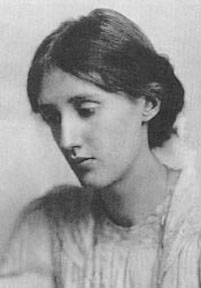
Putting Virginia Woolf in the Mix


I have been hesitant about putting the Virginia Woolf-A Room of One's Own poems in my collection. The collection, after all, is an attempt to re-write myths, folklores and fairytales. So wouldn't it be weird to put my series on A Room of One's Own in there? But then, I did. Because, while working on this collection, I have often felt the need to expand the meanings of the word myth. If colonialism hasn't been a myth, then what has been? If elite white feminism isn't a myth, then what is? As I worked through the poems, I kept wondering, myths are myths, after all, no? A myth is a representation, that is. A way to inscribe a mythmaker/writer's desires, dreams, frustrations and aspirations within the body of a story. One can say, it's not the real thing in that sense. Just a story. Something imagined. Constructed. Then isn't it going to incongruous to mix historical figures like Virginia Woolf with mythical figures like Cinderella and Briseis?

But then, I also began to feel more confident about the fact that those imaginations and constructions are born out of the real thing (s), I realized. I mean, if there wasn't any patriarchy, Grimms Brothers wouldn't have written Cinderella in the way they did. So myths are historical to begin with. And history often takes the shape of myths. I played with the two a little bit, mixed them up, brushed them against each other. The way the manuscript stands now, there is a section on my "mother-poems." Three poems on Woolf, one on the Bengali folktale Arun-Barun-Kiranmala, one a re-writing of a Bengali popular lore. Apart from the fact that mothers do not necessarily cut very impressive figures in Grimms Brothers, I was also intrigued by the fact that "foremothers" occupy such an important place in Euro-American feminist literary criticism. It is almost a trope. But do we always need to glorify our foremothers (and mothers)? Is it possible always to have an unproblematic relationship with our foremothers? These were some of the questions I was asking in these poems. I thought, it would be interesting to see how my more "straight" re-writing poems look when juxtaposed with my Woolf poems. Hence, the section.

For me, there is no Grimms Brothers fairytales or Greek epics without the mediation of British colonialism. So if this manuscript is all about re-evaluating my own social, political, feminist concerns as a Bengali middle-class, (too) educated woman, seen through the lens of popular folklore, tales and myths, then there is no escaping the colonial history or neo-liberalism. Hence, the section on Woolf.

I will be curious to see what my TRUSTED READERS think about it. If they even pick on this particular aspect.

Wednesday, September 22, 2010

The Fairytale and the Book

I have always been interested in fairytales/folktales. Partly because they were probably the first truly-formed stories with recognizable beginning, middle and end that I was introduced to. I read Tuntunir Boi, Thakumar Jhuli and a whole lot of folktale compilations coming out of Peking/Beijing and Moscow.(Did I just give out my heritage? I think, I just did. But just for the sake of record, I claim a Bengali middle-class Naxalism-smelling milieu as my true heritage. Which, I believe, makes it impossible for me to claim any ethnic heritage squarely, my readers and friends.) Anyway, I read those in Bangla, and as I began to get fluent in English, I began to read the re-tellings of Hans Christian Anderson and Grimms Brothers stories. Yep, I always thought of them as "English", until I began to be trained as a comparatist and got to know a little bit about the vexed history of folklore and the "tales." What is intriguing to me now, is that, "folktales" came to me in the form of books, not as oral artifacts. Yes, there were stories that my grandmother told me, my mother also told me which she herself happened to hear from her dad, that is, my grandfather, who died when I was only four. But my mother's way of introducing me to folktales, both Bengali and global, was to read them out to me from books. So, in my imagination, fairytales have always been associated with the book. The book as a material object. The book as a form of re-telling. And also, when I think of the book as a mode of re-telling the fairy-tale, I am not just referring to the stories, told in words and alphabets, but also the pictures. If my experience is anything to go by, the illustration in children's books play an important role in telling the story, in giving the children important pointers as to how to interpret the story itself. And those pointers are often visual in their very nature.

I am thinking about these questions more and more as I am working through my manuscript of poems. I started out with the intention of re-telling some of the fairytales/folktales that have appealed to me. Pointing out the gaps, filling them in. But now, I am thinking, that a mere attempt to re-tell these tales isn't enough. I will have to think through a lot of these things in much more details. There are lots of complexities within these forms, within the very processes through which I got acquainted with these forms, which can form the basis of very interesting poem-projects. But for that, I will have to move beyond the mere "re-telling" mode. This morning, I have been reading this micro-essay by Barbara Jane Reyes. I am especially intrigued by her concluding lines:

I don't know where the belief that spoken word is not poetry was bom, how it has been cultivated and propagated, but I do know that spoken word artists have been othered as the fictitious line has been drawn between them and the poets. When talking to students, I don't have the time to linger on where this cleaving began. Instead, let me refer to Juan Felipe Herrera's 2005 lecture, "A Natural History of Chicano Literature":

Your friends, and your associates, and the people around you, and the environment that you live in, and the speakers around you...and the communicators around you, are the poetry makers. If your mother tells you stories, she is a poetry maker. If your father says stories, he is a poetry maker. If your grandma tells you stories, she is a poetry maker. And that's who forms our poetics.1

This is a fairly self-explanatory statement that I try my best to impart to them. Poetry is not meant to be locked up in inaccessible spaces. Poetry is about paying attention, not just to the stories all around us, but also and especially to how these stories are being told.


While there are lots of things that are of relevance to me here, what I am especially concerned with, at this point, is her concluding sentence. We, as poets and writers, need to pay attention to "how these stories are being told." So, if that's the case, then it becomes an imperative that I pay attention to THE BOOK too, when I am trying to engage with the very tradition of fairy-tales. At the same time, when my mother read these stories out loud to me, wasn't she also exercising a kind of orality, which is different from the talk-story tradition, but nonetheless interrelated?

Now, what it means for me now is that, I need to work harder on this project. Read more, write more, push myself more. Oh well...