Pages

Showing posts with label Politics of Writing. Show all posts

Sunday, July 22, 2012

<< Reflections on Why I Write What I Write >>


I have been trying to think of the issues and themes that have guided my poems in the recent times. When I first began to write seriously again, I was writing two kinds of poem – a kind of high lyricism with a very strong sense of “I” and an overload of images, and what can be called speculative poems, exploring myths, fairytales and such. I was avoiding the so-called “confessional” poems because I was hyper aware of the ways in which as a woman, and especially a woman-of-color who is also a citizen of a Third World nation, whatever I write will be read as overtly autobiographical. Now, I don't like the term “confessional.” The word appears to be overtly hierarchical, bringing to mind vastly Christian notions of sin, guilt, priesthood. Even if I ignore the religious overtone of the word, it is hard to be inattentive to the ways in which the word circumvents notions of social power, guilt and wrong-doing. Now, I have nothing to “confess” in that way, having been totally dismissive of the heavenly “F”ather and highly questioning of the earthly one. Yes, I am a sinner in most ways, and I celebrate my sins. In fact, the sins I have committed are highly connected to my notions of social power and resistance, and if I have to indulge in a prayer, it would be something like this : “Dear Universe, give me the power to be a better sinner and sin in more and more creative ways.” So, that is why, I repeat, I am not a great fan of the term “confessional poetry.” Autobiographical poetry, yes. Memoir-based poems, yes. Life-story poems, yes. But not confessional ones. Then again, even when I was writing the high-lyric and speculative poems, I was being autobiographical. I haven't written anything to date that hasn't passed through my consciousness-- in some way or the other.

The way I see it, what goes on under the label of “confessional poetry” in American literary circles, have facilitated the opening up of certain things as legitimate subjects of poetry – women's lives and worlds, women's work within the family and the social relationships that encompass familial lives. The body of poems (and by now, it is a HUGE archive, mind you) that constitute the so-called “confessional poetry”, have succeeded to evolve a language which leads the writers to reflect upon the forms of structural power that invade the lives within families, the drudgery that is domesticity, the little (and often almost invisible) ways in which women resist or do not resist. The “I” in such poems are often highly gendered, and if I have to sum it up in one sentence, these poems have made it possible to make the everyday configurations of gendered violence a legitimate topic of poems (and I would argue, lyric poems too. But that's the topic of another post.) I am not claiming that the “confessional poems” are solely focused on gender. Neither am I claiming that they have been only written by women poets. In lots of ways, "confessional" poems have also made spaces for the writers to write about violences of race and class, and the intersections of such categories as gender. But, inspite of that, I do think that the confessional poems have given gender a form of visibility that is unique in many ways.

Now, the thematic and political concerns of these poems had always been my concern too. I wrote about similar topics and themes, but I also concealed myself within the folds of a “she.” Sometimes, I would write deliberately obscure imageries and call them avant-garde. But, after a while I had to confront the fact that I am really hiding behind language, I am hiding behind stories and the so-called narrativelessness/problematization of narrative etc. etc. I was claiming I was doing. And I needed to face myself if I had to continue writing. So, I turned somewhat consciously to the “confessional” poetics. I tried to be less afraid of the “I”, and I began to write poems whose raw materials were derived more directly from my own childhood, my own youth – my own life-history, so to speak.

A lot of those poems are raw. They are sometimes really really angry, sometimes overtly sad. A lot of them are not good poems as such. But they did two things for me: they lead me to see my own family as a site of violence. I could not hide behind broad, big, macro-level claims of how family as an institution is itself patriarchal, how family is a site of violence blah blah blah. These poems made me confront how my own life within my own family has been extremely violent in a totally benign kind of a way. How I have been shaped by patriarchy. How my mother has been shaped by patriarchy. How my father has been shaped by patriarchal notions of masculinity. How my mother has policed her own life, and mine. It is not that I was totally unaware of these things before. But once I began to write these poems, I had to vocalize what I could only grumble about in the darkness of my own room and mind. I had to delve into the details, I had to find a viable language for these facts, stories and histories. And that opened up my voice in very important ways.

It was okay to feel sad in my poem. It was okay to be angry. It was okay to call a spade a spade. And...and...and...it was okay to make my persona do things to claim her voice which I could not always do in my real life, but wanted to.

First of all, they led me to see how our notions of love are themselves coded in violence. And families and familial loves-- the most benevolent and benign of them – are implicated within very strange, but totally foundational forms of economic transactions and inequalities. In short, writing these poems made me see the fact that there is no “free” and “equal” love in an unfree and unequal world. And one of the profoundest acts that poets and writers can engage in, consists of tearing apart the veils and masks of our love languages. Now, I would be the first one to say, my parents are not terrible people. Within certain middle-class parameters, they are generous, gentle human beings who have tried to give me a good education and a love-filled childhood in the way they understood it. I don't have anything dramatically bad done to me when I was a bad. I wasn't sexually abused by my loved ones, I never had to think about where my next meal is coming from, I never had to worry about my school fees and such. And these are all tremendous privileges in a nation which has such high starvation and child mortality rates as India. But then, I cannot say my childhood was violence-free. Neither can I say my anger, the sense of violation I have often felt, are baseless and trivial. My life, like that of a lot of others, has always been implicated within banal networks of evil, and it is that banality that these poems gave me the courage to explore. And explore more.

I don't think “confessional poems” are the only kinds of poems I will write for the rest of my life. I do want to keep working on the other kinds of poems I had drafted, give them more complete, definitive forms. But these “confessional poems” have given me the means to explore myself a little bit more which other kinds of poems did not necessarily do. Definitely not in the same way.

Saturday, July 14, 2012

Ars Poetica, Notes To Myself And Other Random Thoughts


As a writer, I am attracted to what is complex, what cannot be seen through a naked eye. I am attracted to those aspects of life which we tend to shove and push under our rug in the course of our lives. I tend to draw attention to those moments which most of us would tend to ignore. Because, sometimes they are too uncomfortable. Because, sometimes they are too trivial. Also, often times I am drawn to contradictions-- between human beings, within the psycho-social world of one human being. Consequently, I am attracted to writings that engage with the uncomfortable. I don't think my writing has accomplished anything in the world yet. Neither do I think it has reached that level, but the more I read and write, I become convinced that the task of the writer is to de-mystify. To rip apart the veils with which every aspect of our daily lives are shrouded with. Yes, as a writer, I believe in a conscious engagement with the power-structured which guide our lives. I am also recognizing, that it is impossible to do so without an incessant struggle to be a better person. It also requires a cruel recognition of my own limitations as a social human being AND as a writer. But, stopping there at that acknowledgement would NEVER be enough. The hard part is to engage in that continuing struggle to confront and surpass my limitations – both as a human being and as an artist. Right now, as I am writing these lines, with the chilli boiling in my kitchen-stove, I feel intimidated by the road that lays ahead of me. I feel inspired too : the poem I am writing is progressing. I finished today the monthly quota of my submissions. I am walking ahead. Slowly, but surely.  

Monday, July 9, 2012

;;Writing Time ;;


At some point, while writing my stories and poems, I discovered, different languages use tenses differently. In Bangla, we mix up our tenses frequently : the past and present and present-past and pas-present reside together in the way we speak and write. I wasn't really conscious about it when I began to write. I became conscious of it when others in the workshop pointed it out to me. Ever since, tense has been one of those things. I would try to write most of my poems and stories in the past tense. But then, when I would read them again, I would feel that something is missing. And when I wouldn't be conscious of it, the tense would get all mixed up. Then, I had a meeting with the poet Gabrielle Calvocoressi during the TILTS workshop. She read aloud one of the poems I had written, and we talked about this specific problem. She suggested that I write the entire poem in present tense, and the term she used to describe that is “active past.” Yes, that's what I have been looking for so long-- a way to write about past and memory in a way that they are still active. Now when I am revising my poems, I try to write them all in the present tense. Rather than in the past tense which had been my practice so long. It doesn't resolve all the problems of time, but it does sound better. And this is making me think, what if I keep on writing in mixed tenses? Will that put too much pressure on English as a language? The kind of pressure it wouldn't be able to take?  

Thursday, February 16, 2012

Harjo's Kitchen Table

Perhaps the World Ends Here

BY JOY HARJO
The world begins at a kitchen table. No matter what, we must eat to live.

The gifts of earth are brought and prepared, set on the table. So it has been since creation, and it will go on.

We chase chickens or dogs away from it. Babies teethe at the corners. They scrape their knees under it.

It is here that children are given instructions on what it means to be human. We make men at it, we make women.

At this table we gossip, recall enemies and the ghosts of lovers.

Our dreams drink coffee with us as they put their arms around our children. They laugh with us at our poor falling-down selves and as we put ourselves back together once again at the table.

This table has been a house in the rain, an umbrella in the sun.

Wars have begun and ended at this table. It is a place to hide in the shadow of terror. A place to celebrate the terrible victory.

We have given birth on this table, and have prepared our parents for burial here.

At this table we sing with joy, with sorrow. We pray of suffering and remorse. We give thanks.

Perhaps the world will end at the kitchen table, while we are laughing and crying, eating of the last sweet bite.

I have been thinking about this poem a lot, especially how this one would speak to Shonto Begay's poem that I blogged about here. Harjo's poem makes visible a lot of things
which Begay's poem obscures-- women's labor, the conflicts that happen around the domestic space, the production and reproduction. There isn't any "I" in this poem.Instead, there is a "we." However, there is still something that makes me uncomfortable about this poem. What does it mean to say the world begins and ends at the kitchen table, when the struggle for a large section of women in this world had been to construct a world beyond the kitchen table. It doesn't really shrink a woman's world per se, as it happens in the Begay poem. But it shrinks the world itself to fit into the space of domesticity. I am trying to formulate a way in which to relate this shrinking to the kind of politics of indigeneity that Harjo ascribes to, but haven't been able to do it yet.

Thursday, February 9, 2012

::In My Mother's Kitchen: Thoughts::


I have been thinking a lot about food, because I am teaching a class on food. I like to eat, I like to experiment with ingredients in my kitchen. But when I approach food as the raw material for my scholarly and creative reflections and productions, I am primarily interested in these things: food and its relationship to concepts of power, food as a site of power, food as a site of resistance, food as a site that exists as an intersection of social processes like labor, commodification and consumption. Because I am interested in the labor that happens around food production, I am also interested in the valence of the kitchen-space. Kitchen the space within which most domestic food production happens. Kitchen the space which has, for so many centuries of human history, has been seen as the space where women belong. I can flip the equation around, and also say, because I am interested in gender, I am interested in the history and politics of the kitchen. I have been trying to find poems and memoir-pieces on kitchen. And this is one of the first things that came up when I did a Google search with the keywords In My Mother's Kitchen.

IN MY MOTHER'S KITCHEN

Fragrance of fresh tortillas and corn stew

Fills my mother's kitchen

Sparsely furnished

Crowded with warmth


Soot-grayed walls, secretive and blank

She moves gently in and out of light

Like a dream just out of reach


The morning light gives her a halo

That plays upon her crown of dark hair

Strong brown hands caress soft mounds of dough

She gazes out into the warming day

Past sagebrush hills, out towards the foot of Black Mesa

How far would she let the goats wander today

Before it rains


Childhood dreams and warmth

Tight in my throat, tears in my eyes

The radio softly tuned to a local AM station

News of ceremonies and chapter meetings

And funerals

Flows into the peaceful kitchen

Lines upon her face, features carved of hard times

Lines around her eyes, creases of happy times

Bittersweet tears and ringing silvery laughter

I ache in my heart


My mother's gentle movements light up dark corners

Her gentle smiles recall childhood dreams still so alive

My mother moves in and out of light

Like clouds on days of promising rain

—Shonto Begay


And here is Begay's website: http://shontogallery.com/wp/


What struck me about this poem is the way the poet reveals the little details of the mother's kitchen. There are so many images in this poem, much like the classic confessional/memory poem tradition of American poetry. But, all those image-work have been mobilized towards a specific impulse : to construct the mother's kitchen as an abode of peace, and the mother as a figure who embodies all that is "gentle" in life. Given Begay's personal and creative history, I am seeing in this poem a well-known trend: constructing the kitchen and the mother that provide refuge against the outside world : the world of funerals, tears and chapter meetings. In other words, the colonizing world which is only capable of generating trauma. But then, the mother in this poem is hardly a "real" figure : she "moves in and out of light", she is like a "dream that is out of reach." Yep, she becomes the classic national allegory. The allegory of the indigenous "American" nation that hasn't been born, that probably will never be born, and therefore, like the mother of this poem will always be a little elusive, its dream-like quality providing solace during moments of stressful contacts with the "mainstream" world.


But this is not just all. I am also thinking about how this elusive mother-figure keeps appearing in male poetry throughout the world. And not just the mother figure, the figure of the allegorized woman, Like Jibanananda Das's classic imageries of "kishorir chal dhoya haat" ( the young girl's rice-washed hands). In spite of their huge geographic and cultural difference, what is common in Begay and Das's kind of metaphor-making is that, it transforms women's actual labor into romanticized allegories, symbolizing some kind of inaccessible, elusive antithesis to the trauma of the outside world. So, when I read poems like this, I cannot help asking: where is the actual labor of the mother within the space of the kitchen? How does the mother-figure's frustrations and hysteria get reproduced within the kitchen space? How does the kitchen become the space where women's trauma (as against the "outside" world and its identification as the space for male trauma) gets constituted, articulated, expressed? And last but not the least, how does the mother herself see this kitchen? Does this ever become the space for expressing her creativity? What I am seeing as I am reading these lines I just wrote, what are the questions that we need to ask in order to de-naturalize the idea that kitchen is the essential space where women find belonging, and somehow, that's inherent in the very constitution of women. Unfortunately, in spite of the beauty of his images, that's what Begay's poem ends up doing.


As I am struggling through these questions, I find myself writing some poems which try to answer these questions. So far I have written six such poems. All of them are pretty short. But I am enjoying writing them. And along with finishing the first draft of the dissertation and teaching, that's what I have been up to.

Friday, December 23, 2011

~;; Creative Policing;;~

I received some good feedback for my chapbook manuscripts from my friends. So, I am all ready to do the next set of edits. But, as I was reading through some of the comments sent by my friends, I noticed something-- a lot of them said things like "editors don't like this" or "you'll have to do this in order to impress the contest judges." And I recognized, I do it too. It was a moment of recognition, of fright. I know my poet-friends who say that, are trying to be on my side. As I try to be on their sides when I write such comments on their margins. Because, my friends want to see my work published. I want to see my friends' works published. But, at the same time, by doing this we police each others' works. And this kind of policing has nothing to do with creativity, providing rigorous feedback and critique. Instead, by reminding each other of what the editors, contest judges--the authority figures-- like, we create a culture of reinforcing established norms of creative expressions. We destroy each others' capacity to take risks, to push against the established norms of culture-making. Thereby, we take up, without necessarily being asked to, one of the most important works of the poetry industrial complex-- the production of technically competent but creatively challenged works of art.

This time, when I got comments like that, I had to stop for a minute. On the one hand, I am not one of those poets who trivializes feedback. I believe in providing and receiving feedback, revising my poems according to the feedback received, although there have been times when I have rejected feedback too. But these comments disturbed me. Poetry is important to me, it is my vocation. But it is not my profession. I do not expect my poems to pay my bills. For that, I do other kinds of work. And in my day-job, I have to accept compromises, presence of authority figures and lots of other crap, precisely because food and a place to stay are important for me. I like them! But when I come to my poems, I want to retain that little bit of creative arrogance. I do not want to bow down to the rules established by the authority figures, to the rules established by literary marketplace. That does not mean I do not believe in the art of a professional cover-letter or I want to pass my bad poems as "creative rebellion." I want to do the best job I can of my manuscript. I want to revise and re-revise it, and provided I have money, I might also put it up for contests. But what I am not ready to do yet, is to mould my work according to some arbitrarily accepted market-rules. I will try to do the best job I can, and if that is "good" enough for the market, well and good. If not, I will look for other venues of propagating my work.

Thursday, December 15, 2011

Putting This And That Together

I have begun to work on my poems again. Day before yesterday, I assembled my chapbook. Yesterday, I revised about half of it, taking things out, making notes to myself about the possibility of adding things in. I also made a few edits. I have assembled chapbooks before. But never before have I felt sure about the project in the way I am doing now. Probably because I have worked on these poems longer than I have done with the other ones. Probably because the chapbook-project itself, in its entirety, feels a little bit more complete to me than the previous ones did. Reading them, after assembling them together, I always felt there is something missing. This one feels relatively complete. This afternoon, I will finish reading the rest of it, and do some more edits. Hopefully, by the end of this week, I will have a draft to email to some of my friends.

One of the things I noticed while reading the poems, my lines were short. I have tried to avoid "weak" words at the end of the lines. But when I was writing these poems, I wasn't necessarily thinking about the line-breaks. My attention was more towards developing a language capable of expressing what I was trying to express: the claustrophobia of a girl growing up in an over-protective middle-class Bengali home. One almost characterized by a sort of benevolent patriarchy. Where girls are taught to be economically self-sufficient, working hard in school, while retaining the essential respectability of middle-class gendered norms. In other words, I am writing about a bag of contradictions. Some of these are very hard to pin down. Some of these, depending upon where a reader stands, might not look "oppressive" at all. But the primary focus of my manuscript is the persona-narrator. She is the one who observes, comments upon her own upbringing, her parents' lives, her own sense of claustrophobia. And most importantly, her desire to leave. In other words, in finding a language to express her own frustrations with her own upbringing, this persona-narrator is going through a process of expansion. Yesterday, as I was reading through and revising the poems, I realized my lines are too short. They do not necessarily reflect the process of expansion this girl is going through while evolving this language through which to provide a critique of Bengali middle-class benevolent patriarchy. So, one of the changes I will have to make when I begin to make the changes, is to expand the lines. Make my persona-narrator take up space on page. Visually, materially, metaphorically. I am not sure if that will give my poems the intended effect. But I am psyched to be even able to think this way! I know I wouldn't have been able to think about form this way couple of years back. This is all very exciting, and I am looking forward to my time in the coffee-shop, with a hazelnut latte, my manuscript, pen and collections of poetry.

Monday, August 15, 2011

{Ongoing Thoughts About Femininity, Motherhood and Women's Poetry}


The poems about daughterhood I have written in the recent past, and which I have begun to send out recently, are generally more appreciated by men than by women. I didn't think about this part of the reception when I was writing them. It is only recently that I have come to recognize this aspect of the reception of my own work. I am still processing it, and I don't have any well-developed theorization about it.

But I have my suspicions. I think, men and women are taught/socialized to think about inter-generational relationships differently. Men think conflict as an integral element of inter-generational relationships. Women think of them more in terms of nurturing. Coming-of-age for girls often translates into accommodating themselves into the imperatives of the roles of nurturers and care-givers. Personally, I don't think these are either/or realities. Both conflict and nurturing can co-exist within a particular relationship. In fact, I would say, most relationships, which move beyond a superficial exchange of niceties, involve both. Where the whole thing gets more complicated is the place where our inter-generational experiences get constructed in specific ways by the societies and cultures we live in.

By that token, women are not expected to write about conflicts, the anger they feel for their mothers. Instead, mother-poems, like grandmother-poems, are supposed to be all about nostalgia-- of finding that space of purity where mother and daughter come to share bonds. Of course, there are plenty of women poets who have written against that expectation, but in my experience, it still throws people off, and especially women readers, when they encounter a woman writing about conflict in their relationship with the mother. It is as if the denial of the mother would come to an essential denial of the writing woman's own femininity. And this is something, I plan to write about very soon, it's still very hard for women writers (and women in general) to lay claim to their own anger. The mainstream women's poetry in this country (written mostly by white women) bears important testimony to that. I can say the same thing about Bengali women's poetry too. But that's going to be a whole different post.

Sunday, June 26, 2011

::Why Kiranmala::


A friend of mine, after reading the poem in Stonetelling, asked me, why I chose Kiranmala. Is it because she is a "Bong" heroine. There are lots of reasons why I am fascinated by Kiranmala, but I don't think her "Bongness" is one of them. This is something that I have been thinking about a lot these days: this question of identity in the way it often comes up in my discussions with friends and students who are second generation South Asians in this country. Bangla has never been about "identity" or "heritage" to me in the way American identity politics speaks about one's racial/cultural/ethnic identity. It was the first language that I learnt. My sense of music has been formed by Bangla words, the cadence of that language. I sing Bangla songs when I am alone without really thinking about it, because that's what I know, that's what there is in my sub-conscious mind. I didn't grow up in a social milieu where people were "post-colonial hybrids." English was a foreign language to them, a familiar foreign language, but a foreign language still. They were scared of it, in awe of its skilled users. Some people I know and have grown up with, managed to developed a functional knowledge of it. My father one amongst them. Most didn't. In India, how one uses English gives out one's economic and cultural class. The lower-middle class, suburban Kolkata milieu where I grew up, people spoke, read, wrote in Bangla. That's what they still do. And I know, if I have to make any attempt towards building up any thread of communication with them, I cannot give up writing in Bangla. So, Bangla is my identity in a certain way. But it's way more than that.

Now, getting back to Kiranmala, she is someone whose life I can imagine much more easily than that a Greek goddess' or Celtic heroine's. Her story I have heard and read many many times. I can imagine how she looked like, what she ate, what colors she loved, what she wore. I can imagine her interior life in a relatively effortless way. Besides, my lit-critter's mind tells me, not a whole lot of work has been done on re-interpreting Bengali folklore, folktales, myths and fairytales. And I am not totally unqualified to do that! So, that's why I write about Kiranmala. Because I can crawl under skin, I can stay there, I can shout and shed tears from there. Yes yes yes....

Monday, June 20, 2011

Critical and Creative: Some Reflections

For the past few days, I have been thinking about something: to what extent does my academic work as a literary critic bear any organic-symbiotic relationship with the poetry/fiction writing I do. It is not that I believe that there has to be a mechanical relationship, but still...

For one thing, in my academic work, I branch out. I branch out to places, languages, histories, literatures far away from my own. At least seemingly. In my poems and stories, I come back. I try to interrogate what has been close to me in a very direct kind of a way. I try to probe through my own childhood,my neighborhood, the people I have known in my life, the milieus that have been operative in making me who I am today.

There are times when it seems the two have nothing to do with each other. But then there are times when I recognize it is my academic work that has taught me the meaning of "reading." What it means to "read" texts. What it means to reside within a text. To take one word, one line/sentence at a time. To take it apart to put it back together again. That is precisely the approach that I try to bring to my creative writing. I try to "read" the life around me: my past, the present, the ever-changing landscape. I try to take it apart. I try to put the people in their contexts. Try to "read" them, find out what made them act the way they did. What made them so extra-ordinarily ordinary, yet singular. What made them conform. What made them rebel and how.

I don't know how life would have unfolded if I hadn't really taken up this PhD. I would have read anyway. I probably would have written too. But that's not the point. The point is, doing academic literary criticism gave me the final push towards becoming a writer. It empowered me to find the stories in my own life, and write them. Therefore, I find no contradiction between the "critical" and the "creative" in my life. In that sense, they are perfectly organic and symbiotic.

Wednesday, May 4, 2011

Joanna Fuhrman's 1968


“The Summer We Were All Seventeen”
From Pageant by Joanna Fuhrman, pg. 4


It was 1968. The clock read 10:43.

The Vietnam War was trapped in the television

like a moptop Rocky Road ice cream cone.

I was hungry ALL THE TIME,

munching on barbeque-flavored soy chips,

slurping pumpkin ravioli with a trimmed white poodle
named Betty Friedan.

It was the year I found twenty pointy virginities moist
in the fangs of a runaway wolf.

The year my voice broke like a lake and I sang
renegade karaoke naked beneath my sparkly trench coat.

Even the sun was an eyelid—

no one could see the rest of the face.

*

Dear Radio,
we love you
even though
we all know
you’re a big-time phony—
we call you
the secret hiding place
of rock and roll,
but we all know
the real
rock and roll
invented
by Arthur Rimbaud
with flaming tambourines
and multi-breasted albino
oranges
you crushed
years ago,
destroyed with your
beautiful
fangs.
*

In 1968 I was the inventor of bonfires and tie-dyed ball gowns,

the inventor of insomnia and transcendent typos. Every song ever
played was written by a monkey on a laptop.

every drum ever destroyed burst with centrifugal liquid lasers.

I was William Carlos Williams dancing
naked in front of the mirror while my wife and children were sleeping.

I was Li Po singing
on the peeling fire escape, smoking pot and cracking jokes about Taoism.

It was 1968 for a whole twenty minutes.

The television broke like fireworks. The television
exploded
like sprinklers.

It was 1968 for a whole century. It was 1968
when we made love beneath
the rainbow canopy of candy GI Joes

and gave birth to a Janis Joplin Cabbage Patch Doll.

Jimi Hendrix swallowed
the ashes and dove headfirst into the My Little Pony blow-up pool.

I was twenty years old
or I was six years old. I devoured every radio,
eating the wires.

I hooked my veins to the electrical current
and wrote emails to Gilgamesh twenty-four hours a day.

I illegally downloaded Steal this Book.

I fell down on the green carpet and stared at my bedroom’s cloud wallpaper.

I saw my face forming in every two-dimensional puff.
It was the summer

of free vowels,
damp noses, exfoliating
participles.

I was nostalgic for the idea of poetry
more than poetry itself.

I injected caesuras in the veins of my toy cadaver

and wrote the word “revolution” all over my friend’s plaster cast.

Rain-soaked toddlers photographed me
and sold the negatives on Ebay.

I covered every centimeter of my body with discarded gun wrappers.

I covered my head with a floating chuppa and sewed a colorful bikini

out of a discarded hijab.

I wore the whole city around my waist as a dangling belt.

Everyone could hear me jangling

from the other side of the globe.
----------
There is something about this poem which disturbs me immensely. 1968, here, appears to be a highly commodified year, era. There is a sarcasm in the tone here, and I think, sarcasm can often be put to really effective uses in poems. So, if I have to read it really against the grain, I will say, this poem mocks the commodification of dissent in the 1960s. But I just want to step back a little bit and ask: was 1968 only about commodification? Was it only about rock and roll, girls with flowers in their hair, and playing revolution? So, I can't really help pointing out that this is a poem that has been written out of the white, middle-class unconscious of the American empire. Yes, the references to a young woman's coming-of-age is interesting here, but even that has been explored through the mediation of a commodified culture, which thrives on appropriating dissent. Where is Black Panther, Young Lords, the demands for Ethnic Studies programs in this poem? Where is race? Where is even feminism? Not to speak of the fact that 1968 means something very different for me, for folks in the Third World. I mean, in India, we are still struggling with the legacy of 1968, what with the Indian state declaring Maoists to be the "biggest internal security threat." Today's Maoism that literally emerged out of the Naxalite movement of the 1968. There can be lots of criticisms of it, some very serious ones. There can be rejections of it too. But it meant a LOT more than a culture of commodified dissent mediated through a highly structured culture industry. Not to speak of the immensity of the state violence that was unleashed.

So I have been trying to write a poetic response to this one. It's happening in bits and pieces, but I think I am getting stuck in between a very familiar language of Leftist nostalgia, and a more inwardly drawn language of individual exploration? How to write about individual experiences of witnessing and participating in a moment of global political upheavals?What happens when one throws gender in the mix? I don't know don't know don't know...but hopefully will get to know...something...a little bit more than what I do now...

Monday, May 2, 2011

Stevens, Abeyta, Thirteen Ways of Looking At Things

Have been thinking a little bit about Wallace Stevens' Thirteen Ways of Looking At A Blackbird. In one of the workshops I took once, this was a required reading. The dominant reading that was collectively produced by the class was, this poem resists the very work/act of meaning-making. I was of the opinion that it might be, but at the same time, the poem also assumes a white, masculinist, imperial gaze as its basis. That gaze works almost as a political/cultural unconscious of this poem. A closer reading of the poem reveals that it is a gaze that travels outwards from inwards. It is impossible for me to read this poem without thinking of a guy standing in a window, watching nature and the blackbird, taking it apart bit by bit. I identify this urge to look at something, especially in nature, as intrinsic to an imperial gaze. It tears open many many complicated questions: who historically had the right to "look" and "analyze"? I am thinking about this "social/cultural/political unconscious" as I am beginning to revise the poems that I wrote for NaPoWriMo. What are the assumptions about the world that I bring into my writing without even being aware? Of course, class. Caste. And all the associated cultural privileges that come with them. But how do such categories make up the symbolic realm of my work? I still haven't figured out fully yet! Maybe, the answer keeps changing! The assumptions I bring in Manuscript A might not be the same as the assumptions I bring into Manuscript B!

Anyways, whenever I read Stevens' Blackbird poem, I cannot help thinking about Aaron Abeyta's poem Thirteen Ways of Looking At A Tortilla. What Stevens leaves in the vague realm of "beyond meaning", Abeyta transforms it into meaning. The very tangible tortilla. The very tangible human hunger. Food. The process of production of food. Food as a reservoir of culture. Race. Class. Labor. And last but not the least, the US-Mexico Borderlands. In short, Abeyta breaks Stevens' almost taken-for-granted imperial setting, allegory.

Whenever I read Abeyta's poem, I become conscious of all writings as essential works of re-writings. And therefore, writings are also about "reading." What am I re-writing in these poems, then?

Well, a post for another day!

Tuesday, April 5, 2011

Where Am I Going With This Project?

I have been working for the last few days on this project. It is not necessarily new. Originally, I had included it as a section in my manuscript which I had compiled for JHG's summer workshop. Someone in the workshop suggested that this can be a chapbook in itself. I had kept the thought locked in some compartment of my head, but didn't really think about it much. Because the poems, I guess, seemed to be too personal, written from an I-voice, and yes, angry and whiny. But then, I began to re-visit the project again. Revised some poems for the UCLA workshop. The folks there generally liked them. And I, too, was looking for a "manageable" book/chapbook-length project that I can lift off the ground while writing the dissertation. I began to work on it again. In the last month or so, I have written some new poems aimed exclusively for this project. I must say, the poems that I have written are not exactly in my comfort-zone. I am writing them, I am trying hard here, but I am still afraid. So what are the fears that I have for this project:

1. the poems will be read as a sort of vulgar autobiographical exercise

2. the earlier poems and the ones I am writing now are different in their essential aesthetics. That can mean both--it can be a source of strength, or a source of weakness. I am not sure how it would look in this particular project.

3. These poems are based on family dynamics. Mother-daughter, father-daughter relationships. The daughter's character/voice looms large here. She is the one who is doing the "seeing", the "narrating", the "writing." There are poems which are also on the conjugal relationships of the parents. Some on the mother's relationship to her parents. But these are all narrated by the daughter. So, the daughter's voice acts as a filter. Now, here comes my biggest fear. Will these poems mean anything to anyone other than me? What it is that I am trying to reconstruct here? Obviously, the easy answer is "the personal is political." But a lot of the American poetry, especially women's poetry I am reading these days, seems to be all personal, and no political. There are lots of re-countings of everyday details of the persona-narrator's life, without necessarily reflecting on the larger implications. Without necessarily trying to answer the "so what" question.(This demands a post in itself.) I am not too interested in writing a book of poems which would sound/read like that. So, yes, I am worried about the ideological/political implications of the work I am doing here.

But also, I don't want to stop here. I want to go on, and see where this leads me. Maybe, once I am done with the first draft, I will begin to have a better sense of it? The thing is, I know so many people who have let their fears of "implications", "ideological value" , "political relevance" of their work stop themselves midway in the project, that I don't want to go down that same path. So, let's see.

Sunday, March 6, 2011

Dobyns' Court Jester


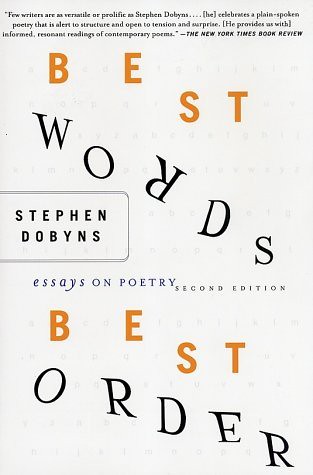
I am reading Stephen Dobyns' Best Words Best Orders: Essays on Poetry. I have long been looking for a book which would reflect on the process of writing poetry beyond the introductory stuff. It's not that they are bad, but personally, I don't have to work on pushing myself to sit down to write anymore. Neither does anyone else have to do the work of convincing me that in order to write, I need to read. Dobyns' book has been helpful so far. Although I have read only the first two chapters. One of the things he does in this chapter is to see the work of the poet through the figure of the court jester. Dobyns writes:

The jester laughs at the king, yet the jester himself has nothing. The dwarf reminds me of that mixture of gall and humility that one must have in order to write.

I agree whole-heartedly with the “gall and humility” part. For me, it translates to this strange combination of rejection, intellectual arrogance, hard work and plain old humility. I know I cannot really create what I want to create without rejecting a lot of stuff in this life-- social ideological and aesthetic. In fact, the way I think about it, the three are intertwined. I need to have the arrogance in me to stay true to my decisions, to explain them to people without flinching. But rejection alone, or negation alone has never done it for anyone. It won't do for me either. So, there is this immense need to come back to the work-table every day, make myself a cup of tea or coffee, munch on a banana, and just write. Sometimes read. Take notes. Look up from what I am doing to think, to process, to figure out more. Needless to say, I cannot really stick to this schedule of hard-work until and unless I also have an open mind to critiques and criticisms. The essential knowledge that whatever I am doing is nothing compared to what can be done. I am not writing about accepting all criticisms blindly, but there is a need to take all criticisms seriously, to think through them, and then reject it with a certain kind of intellectual modesty. As I am learning, criticisms/critiques are also ideological, historical and cultural in their very basic nature. So, I cannot really take them at their face-value. But at the same time, they deserve time and thought, a seriousness of consideration.

Anyways, what is disturbing me a little bit is Dobyns' attempt to see the court jester as having nothing. Of course, the jester has something very important-- the access to the royal court. His work, as I see it, is more of subverting the norms of the monarchy while staying within it, while continuing to enjoy its privileges. And there is a certain kind of utility to it. But what about the artists who prefer to stay away from the court altogether? Who sings and tells stories to people who will never get to see the court? I am not saying, that the two spheres are two air-tight containers, for, it's often that one makes way for oneself inside the court through singing to people. In the same way, there might be poets and story-tellers who make the conscious choice to be one or the other. So, to put it in a more rounded kind of a way, what relationship a poet or artist or story-teller chooses to have with the court, it all boils down to the specific context. But what I am trying to say that, it is symptomatic that Dobyns begins his book with this particular figure. I think, it reveals a lot about the politics of much of mainstream white, male (and sometimes women) American poets to the culture industry. It's all about trying to find one's space to laugh while staying within its logic. It's rarely about changing or moving beyond the rationality of a capital-centric culture-industry altogether.

Friday, March 4, 2011

Processing Feedback

One of the feedbacks I received in class about the revised version “Nomenclature” poem was that:

The newer version has more of a focus on the mother and even the generation before then. That takes me away from the narrator, who I really like and care about.

So I am thinking, this is a series about the conflicts of a mother-daughter relationship. The daughter, who is the narrator, does not stand as a fully autonomous figure (if there is ever such a thing). Instead, these are poems which explore the relationality. The daughter's stories are implicated in her perceptions of her mother, of her mother's stories, and in one or two cases, even the generation before. Am I bumping here against an American aesthetics which wants to see the narrator as a self-contained individual, and nothing but a self-contained individual? I don't see the contradiction between “caring” for the narrator and getting glimpses of the generations before her. If anything, it explores the narrator even more closely within a history and thus provides more space for the reader to know about her. Although I wasn't necessarily thinking about it that way, this poem, the entire series even, go against that notion of self-contained individual autonomy. Our stories are implicated in each other's and therein lies the complexity for me. It is specifically that complexity that I want to represent in my poems, stories, essays!

Tuesday, June 30, 2009

Random Rants and Fears

My productivity always goes down significantly during the months I live in Kolkata. I indulge in it, because this is the time I have ear-marked for myself for getting back to the community of friends and acquaintances whose presence and activities have helped me to be who I am right now. I don't know if there is any "back" in that sense, but the thing is, in the last seven years, I have never felt out of sync with Kolkata or India. No, it's not that I identify with everything that is happening in here. I have a fair amount of ideological/political/aesthetic/personal alienation from spaces and communities here, but it's not really the neither here nor there kind of alienation the so-called diasporic intellectuals seem to be in love with. In my opinion, all places in this planet are equally infested with problematic power relations, problematic ideologies etc. which make living hard. And in all those places, there are individuals and collectivities who are trying to deal with those structures/ideologies in their own ways. Whether I will grow as an individual or not, really depends upon how I negotiate with those individuals and collectivities and how deeply I am reflecting on them or representing those negotiations in my chosen medium.

Speaking of which, have just begun to work on a new short story. It's not coming together yet, but in my experience, some of the stories that I have gotten the biggest satisfaction from are the ones which I found the hardest to write. Probably because in those stories, I have simultaneously allowed and forced myself to go to places within which I am not exactly very comfortable. And I think, one of the biggest understandings that I have come to, through all these exercises in the last two years is that, I am kind of lacking (A LOT) in the Talent Department (Thank God!). Which means, I have to work hard, Hard, HARD, HARRRRRDDDDDD, to produce something that is halfway coherent. I am often worried that I am not putting in that amount of labor, I am slacking off, and some day, I will just get up in the morning and find that all the things I thought I had to say and write about, have vanished over-night, leaving a colorless hole in my head.

That's why, these days, I begin my writing days reading a random page from a book I love. If I can read, and still make sense of what is there in the page, probably it means, that the skin and all those other things in my head haven't eroded so much to form that hole. So, today was Arundhati Roy's The God of Small Things. So, today, this is the passage I read:

While other children of their age learned other things, Estha and Rahel learned how history negotiates its terms and collects its dues from those who break its laws. They heard its sickening thud. They smelled its smell and never forgot it.
History's smell.
Like old roses on a breeze
It would lurk for ever in ordinary things. In coat-hangers. Tomatoes. In the tar on the roads. In certain colours. In the plates at a restaurant. In the absence of words. And the emptiness in eyes
.

This is why, I have always believed that any good art is essentially also good theory. There is no way one can move about it.

Monday, June 15, 2009

Fairy-Tales, Characterization and Writing

The last week has been a breeze---the revision was turned in on time, Kolkata reached, bags unpacked etc. etc. My teacher called my work "a feminist, queer mythical-fabulist tale." I must concede, as a literary critic, who is used to deploying these and other such labels to talk about literary works, it did seem a bit strange to see them being used for my own creation. Honestly, I don't mind. Every text that has been created on the face of this planet,is inherently political, and I have no objection if someone spells out that politics in terms of such labels. But, I must say, that when I was writing, I was not thinking about these labels seriously. Rather, I was taken the act of writing itself, trying to think of the settings, the characters, the craft~the story in general. But then, the politics, the ideology have seeped in. Part of it has to do,I think, with the conscious thought I have put in behind the writing itself. After all, any choice that a writer makes vis-a-vis the craft cannot be but implicated within a complex history of signs and symbols. And therefore, politics and ideology.

Personally, I find this process exciting. At the end of the day, what it signifies for me is the fact that every word in a language is political. Every image that we conjure up in a text can be historicized.A while back, a good friend of mine, a writer and a voracious reader himself, had argued, that what matters in a text, when we read it or write it, is the "emotional resonance" that the process of reading or writing produces. The social and the political come much much later. I know it's not just my friend, but this is a very popular opinion in lots of ways. I would say, that "emotional resonance" itself is not outside of politics, society, and history. But more importantly, I don't see the social/political/ideological and the "emotional resonance" as two separate entities, or binaries. In that, I think, I am not in for that classical Marxist dichotomy between the
form and the content. Rather, I would say, the form is as political as the content, and not only that, a form often times determines the content itself.

The funny thing is, I was somewhat pushed towards thinking about this specific aspect while working on this particular piece. I was trying to think of certain possibilities in the piece. For example,in this work, I am specifically interested in examining the mythical world of the Bengali folklore, and also throwing a little bit of the Grimms Brothers in the mix. So, the names of my characters are loosely based on the female characters one would find in
Thakumar Jhuli, one of the classic compilations of the Bengali folktales. No, I am not trying to “rewrite” or “reform” Thakumar Jhuli. Neither am I trying to provide a more “politically correct” version of the stories therein. I am merely trying to imagine different lives for some of the female characters. Most of them either reside on the margins of the tales, or, are banished from the royal world most of these tales describe, precisely because they did something that was considered to be transgressive.

But there is something very interesting that I came up during the process. One of the feedbacks that I received from all of my writer/critic friends is that, the central characters of the piece did not always come out as full-fledged characters. Which made me think of the kind of characterization one comes across in classic fairy-tales or folk-tales. There isn’t much of detailed characterization in there. Most of the characters appear as archetypes, illuminating specific moral messages. Initially, I was thinking, if this is more of a case with female characters, but now that I think back on it, I will have to concede that no, it’s generally one of the central features of this form we call fairy-tales. I am still not very sure of the politics/sociology behind it, I am still fumbling. But, I am also concerned with another question:to what extent a contemporary writer can intervene with the characterization when one is engaging with the material that has been handed down to us by this existing body of literature commonly known as fairy-tales?


By the way, there is a beautiful translation of Thakumar Jhuli in English, called Tales My Grandmother Told Me by Rina Pritish Nandi. If you want to increase your fairy-tale repertoire beyond Grimms Brothers and Hans Christian Anderson, feel free to check it out.