Showing posts with label Poetry Manuscript. Show all posts
Showing posts with label Poetry Manuscript. Show all posts
Saturday, June 4, 2011
::Silence::Language:: Manuscript::
I am not so concerned with silence as I am with evolving a language for writing/talking about things that have not been or rarely talked about. That is what I am struggling with in my poems. It is not my intention to throw upon the world more victimology. Nor I am interested in writing my own sob-stories. What I am interested in, is to write about the constructions of family, motherhood and familial love. I am concerned about the nation-mother equalization. The way that construction has such stronghold in Bengali cultural and literary imaginaries. There is hardly any language that I can fall back upon while I am doing this work. I am struggling with the language, with the craft. And the easiest thing would be to give it up, and fall into silence. But that silence won't speak. There are times when silence speaks. There are times when it doesn't.

Sunday, January 16, 2011
Reflections on the Poem Seequence
I showed the poem-sequence to D yesterday, and he liked it. According to him, the personal tone in the poems does not sound tacky or cheesy. They are not melodramatic. I can see how and where these poems will be impenetrable for an American audience. Or anyone who doesn't necessarily think of the aftermath of the Partition in symbolic terms. I have been trying to articulate to myself the objectives behind this poem-sequence. What are they trying to do. It is not that I want my explanation to do the work of the poem. It is more like I want to articulate it to myself so that I know where I want to go from here, and things look a little clearer to me. So here it is:
Part folklore, part personal narratives, part oral histories, these poems attempt to interpret the fairy-tale tradition in Bengal through the lens of the experience of Partition from the perspective of women of three generations. I am not re-interpreting any fairy-tales straight up here, but I am trying to explore what roles fairy-tales have played in the lives of these women. Where did fairy-tales lose their relevance in their lives? Where did it stay relevant? Were the fairy-tales equally relevant to all three women? Obviously not. There is a tension there in their relationship, and I have tried to reveal that anxiety through their relationships to the fairy-tale tradition. Yes, in the process I end up making fun of Rabindranath. His Introduction/Preface to Thakumar Jhuli (Tales from Grandma's Bag). The thing is, in Rabindranath's Preface, as in the very name Thakumar Jhuli (or Thandidir Thhole), the figure of the grandmother is an allegorical one. She functions as the repository of culture, one whose job is to tell stories. The way she has been written makes her own personal history, her own biography irrelevant to the stories she is telling. I am trying to give this figure of Thakuma or grandmother a little bit of personal history. And for someone of my generation, if I have to look back on the lives of my grandparents, there is no way I can ignore Partition or the ways in which it disrupted the essential fabric of their lives. In other words, I will have to take into account, how the trauma of Partition might have influenced the stories my (our) grandma (s) would tell. I am trying to do that here a little bit. Pushing the boundaries of that grandma figure, pushing the boundaries of the social history of the genre of Bengali fairy-tales.
Monday, January 3, 2011
The Poem Sequence II
I have finally finished the sequence of poems I had been trying to write on the history of reception of the fairy-tales. Today I need to type them and save them as files in my computer. What I realized while writing this sequence are:
1. I am trying to problematize the exoticization of "folk-poetics" that has been an integral part of an older process of male, bourgeois class-formation in nineteenth century. It is coming back big-time in our neo-liberal era in modified forms.
2. In lots of ways, this exoticization comes very close to a museum aesthetics. This particular aspect opens up some more space of subsequent exploration in my manuscript.
3. My poetic sequence is trying to imagine certain things, certain spaces, certain voices. There is no trying to capture the "authentic" in here.
4. I haven't lived through the partition era myself. Neither have I lived through the immediate post-Partition era, the attempts of my parents' generation to piece together a life from very little. These periods came to me through stories that circulated around me, through silences, through books. That is, my own perceptions of this period is extremely mediated. I am trying to bring alive on page these many forms of mediations than any "authentic" voices.
5. I am more interested in showing the problems in the process through which this "folk-voice" has been put together rather than bringing this "folk-voice" into the page.
6. I know this sequence is far from complete. But I can rest for now. I need to do a little bit more research before I can write the other poems. In short, this is going to be a LONG project. Will need lots of patience, perseverance and er, hard work.
Wednesday, December 29, 2010
"Fairytale Worlds"

I am not sure why folks say "fairytale ending", "fairytale reality" to suggest imaginary worlds where nothing ever goes wrong. I mean, fairy-tales are VIOLENT. And although things seem to work out at the end, they always do so at the cost of some immense violence done to at least one of the characters, mostly women.
I am trying to finish this particular sequence of poems done before the end of this year. From where I am standing now, it seems I might just be able to do it!
One of my mentors pointed out, that a lot of my poems are about the inherent symbolism of language. I haven't thought about it before, but I would have to agree. I have been taken up more and more by the act of writing itself, the politics of the writing process, the political limits of specific modes of writing. What can a manifesto do which a poem cannot? The sequence I am working on right now, thus, is more about a world where fairy-tales begin to lose their meanings rather than provide a coherent way of explaining it. It's a slippery terrain, and I am still struggling to keep my balance intact.
Saturday, December 25, 2010
The Poem Sequence
Have been trying to write a series of poems which would chart the processes through which fairytales begin to attain contradictory meanings in the lives of Bengali women. I do not want to exoticize fairytales in my poems. Rather, I want to open up a personal/political history of reception of the fairytales from the perspective of Bengali middle-class women. It is an inter-generational history, and that's why, also has to be multi-vocal. I am struggling with the use of the pronouns in this particular sequence. There are too many shes. I am still trying to find my ways around it. One thing I have realized in the last few months. Writing is a form of art which needs intense engagement with the world. Craft is important, but it is just one element in the equation. What one needs to do is to keep on enlarging one's world. That happens with continuous interactions with the social world, and and and...reading. What I am trying to say is that, most of what we call inspiration, is, in reality, back-breaking work and successful appropriation of the work that is being done by others. For example, I had been reading Kwai-Yun Li's The Last Dragon Dance, a collection of short stories about the Kolkata Chinatown. The book is not "great" by any means, although very very interesting and raises lots of questions about diaspora and representation. But what it did for me was to give back a sense of place, which I am desperately trying to etch in the words of this particular poem sequence. Once the whole book would be completed, it would be interesting to go back and see how Kwai-Yun Li has begun to reside in my poems! Yes, I am the one who would be writing these poems, but I am not alone in this. I am, in fact, in writing something, thrusting my own voice within already existing collectivities.
Thursday, December 23, 2010
The Title: Inking the Hyacinth
For a while, I didn't know what the title of the manuscript is going to be. Then, I played with a couple. Now, I have settled for Inking the Hyacinth. Most of my readers loved this name, I have a special place for this particular poem. It was written during a time when I was trying to grapple with the idea of creativity in lots of different ways. But what is most important is that, this title represents in ways more than one the essential notions of creativity which the manuscript is all about-- the symbolic role of writing, gendered notions of writing, women, the different modes of resistance that one can embark upon through acts of creative expression. I am happy with it.
For the last couple of days, I have been writing poems which I am planning to include in the manuscript. I am hoping, they will go towards contextualizing the project a little bit more. The work I am doing now is exciting, but it is also daunting at times. I keep asking myself, will I retain my steam till the end? Do I have the capacity to move into such depths? I don't know. But I am trying.
Monday, December 20, 2010
Revision, Taking Out Things
KRA's suggestion was that I need to trim down my manuscript. I have decided to take out the series on Briseis and the Crow/Sparrow poems. Both of those series need more time to ferment, and more space to bloom fully. In fact, I think, both of them will do good as stand-alone chapbook projects. That way, the collection I have can also become a much more focussed one on fairytales/folklore and the Woolf re-writings. I have some ideas about the revision, let's see how it develops.
Have finished revising chapter two of the dissertation. Need to send it out to the co-directors.
Sunday, December 19, 2010
Writing Notes in Poems
My post-colonial training had taught me to be suspicious of readers who want the "ethnic" writer to do the work of the native informant. I am against providing extensive notes for the poems I am writing. I don't want to explain the historical context of the Arun-Barun-Kiranmala story too much, I don't want to provide a glossary of each and every Bangla word I use in the poem. Instead, I want the reader to do some amount of work. I want them to look things up. I want them to think about the world I am writing in. But after getting back the manuscript with KRA's detailed feedback, I am wondering about certain things. For example, I have learnt that not only shouldn't I take for granted my American readers' knowledge of South Asian/Third World fairytales, I shouldn't also take for granted their knowledge of Greek mythology. Like, I discovered very few of my readers recognized who Briseis is. This made me think about ways of reading a lot.
One can argue that Briseis is a minor character. So it's not too hard to miss out the segments where she appears. But on the other hand, "missing out" on things also reveals ways in which we are taught to see things in a text. If an epic is all about valorizing male military heroes, and most of the readers go to the text expecting that and without questioning the basic premises of male martial heroism, chances are they would miss out on lots of things. What this means is that, any writer who is "revising/rewriting" into existing narratives, is also trying to show the readers different ways of reading the canon. As a poet, I have the responsibility of opening certain doors for the readers. And I should do that. If writing a slightly longer note helps me in that task, I will do it. Because at the end of the day, it's not my erudition that's at stake. What is at stake is that I am trying to show the readers that there are other things to think about while they approach a very familiar canonical text. That arrogance, that I won't really add a note to it, I would rather have the readers struggle through it, seems to be kind of an academic elitist exhibitionism which I can do away with.
Saturday, November 27, 2010
Researching Briseis

I didn't do extensive research on Briseis before beginning to write my poem. I did some cursory research from the materials I could readily get online. It was fascinating to realize that not a whole lot of modern writers have taken her up. And of course, in Iliad she does not get more than a few lines. I have long wanted to write about sexual violence.
In 2005, I had written a fairly confessional poem on rape. The feelings in there were raw, and most of the times whenever I placed it in a workshop, it had the effect of total silence. I can understand the reasons. Sexual violence does have that silencing effect in general. But when it is explored in a poem, people don't necessarily want to deal with it because they are scared of treading on some terrible personal experience. I would be too. Then again, when personal experience gets written into the body of a poem (or a story or novel), critiquing that text is helpful, and I would say, even an imperative. Because in doing so, a workshop helps a writer to communicate the complexities of that personal experiences more effectively.
But by 2010, I am fairly ready to create some distance between my personal experiences and that poem. Briseis' name somehow leapt from the page. In lots of ways, I think, it's because I have been thinking about the kind of role an occupying army plays. Kashmir,Manipur,Jangalmahal,Iraq, Palestine...how does the occupation look from the perspective of a woman? I wrote the first draft of the poem, didn't do a whole lot of research. Because I didn't necessarily want the research to overwhelm me or the yet-unborn poem. Rather, I wanted to explore the basic premises of this character, before launching into an exhaustive research.
But what I found out was, I can't really explore the vicissitudes of Briseis' life until and unless I familiarize myself more with the realities of her life. The material details. The details can be tweaked to suit my purposes only when I begin to "know" about them. So, now I am trying to go back to the research work. Especially since I have the basic outline of the poem, and I know where I want to go with it, I also know where I want to go with my research. I have ordered a few books, couple of academic monographs, couple of translations of Greek plays, and I might just check out some more from the library.
And here is what I am using as my springboard:
http://www.stanford.edu/~plomio/briseis.html
Friday, November 26, 2010
I Haven't Reached the Doneness Yet
I have reached the magic number 48 for my poetry manuscript. Honestly, it wasn't hard. I have never had any problem in reaching the minimum words/page limit. What I struggle with is, keeping to it. I now have 64 pages of poems. But I am not done. I know I am not. I haven't exhausted myself writing. I have barely laid out the bones. A lot more needs to be done. Feeling the bone with flesh, blood, wrapping the organs up in skin. I don't want to leave anything untouched. Who knows what future has in store! Maybe this is the only book I have in me! That's why, I know I need to give it everything I have, exhaust myself.
I agree the temptation to turn in the work the way it stands now is great. And who knows, there are so many publishers in this English-speaking world. Someone might like it. But that's not the point. I am not done with it yet. That is what matters for me. I have made some progress in the last ten weeks, and I value that progress. That progress, however, does not mean that I am done.
I agree the temptation to turn in the work the way it stands now is great. And who knows, there are so many publishers in this English-speaking world. Someone might like it. But that's not the point. I am not done with it yet. That is what matters for me. I have made some progress in the last ten weeks, and I value that progress. That progress, however, does not mean that I am done.
Tuesday, November 16, 2010
Putting Virginia Woolf in the Mix
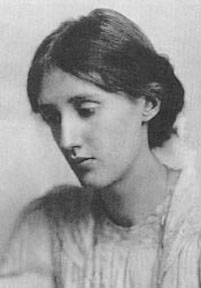
I have been hesitant about putting the Virginia Woolf-A Room of One's Own poems in my collection. The collection, after all, is an attempt to re-write myths, folklores and fairytales. So wouldn't it be weird to put my series on A Room of One's Own in there? But then, I did. Because, while working on this collection, I have often felt the need to expand the meanings of the word myth. If colonialism hasn't been a myth, then what has been? If elite white feminism isn't a myth, then what is? As I worked through the poems, I kept wondering, myths are myths, after all, no? A myth is a representation, that is. A way to inscribe a mythmaker/writer's desires, dreams, frustrations and aspirations within the body of a story. One can say, it's not the real thing in that sense. Just a story. Something imagined. Constructed. Then isn't it going to incongruous to mix historical figures like Virginia Woolf with mythical figures like Cinderella and Briseis?
But then, I also began to feel more confident about the fact that those imaginations and constructions are born out of the real thing (s), I realized. I mean, if there wasn't any patriarchy, Grimms Brothers wouldn't have written Cinderella in the way they did. So myths are historical to begin with. And history often takes the shape of myths. I played with the two a little bit, mixed them up, brushed them against each other. The way the manuscript stands now, there is a section on my "mother-poems." Three poems on Woolf, one on the Bengali folktale Arun-Barun-Kiranmala, one a re-writing of a Bengali popular lore. Apart from the fact that mothers do not necessarily cut very impressive figures in Grimms Brothers, I was also intrigued by the fact that "foremothers" occupy such an important place in Euro-American feminist literary criticism. It is almost a trope. But do we always need to glorify our foremothers (and mothers)? Is it possible always to have an unproblematic relationship with our foremothers? These were some of the questions I was asking in these poems. I thought, it would be interesting to see how my more "straight" re-writing poems look when juxtaposed with my Woolf poems. Hence, the section.
For me, there is no Grimms Brothers fairytales or Greek epics without the mediation of British colonialism. So if this manuscript is all about re-evaluating my own social, political, feminist concerns as a Bengali middle-class, (too) educated woman, seen through the lens of popular folklore, tales and myths, then there is no escaping the colonial history or neo-liberalism. Hence, the section on Woolf.
I will be curious to see what my TRUSTED READERS think about it. If they even pick on this particular aspect.
Wednesday, September 22, 2010
The Fairytale and the Book
I have always been interested in fairytales/folktales. Partly because they were probably the first truly-formed stories with recognizable beginning, middle and end that I was introduced to. I read Tuntunir Boi, Thakumar Jhuli and a whole lot of folktale compilations coming out of Peking/Beijing and Moscow.(Did I just give out my heritage? I think, I just did. But just for the sake of record, I claim a Bengali middle-class Naxalism-smelling milieu as my true heritage. Which, I believe, makes it impossible for me to claim any ethnic heritage squarely, my readers and friends.) Anyway, I read those in Bangla, and as I began to get fluent in English, I began to read the re-tellings of Hans Christian Anderson and Grimms Brothers stories. Yep, I always thought of them as "English", until I began to be trained as a comparatist and got to know a little bit about the vexed history of folklore and the "tales." What is intriguing to me now, is that, "folktales" came to me in the form of books, not as oral artifacts. Yes, there were stories that my grandmother told me, my mother also told me which she herself happened to hear from her dad, that is, my grandfather, who died when I was only four. But my mother's way of introducing me to folktales, both Bengali and global, was to read them out to me from books. So, in my imagination, fairytales have always been associated with the book. The book as a material object. The book as a form of re-telling. And also, when I think of the book as a mode of re-telling the fairy-tale, I am not just referring to the stories, told in words and alphabets, but also the pictures. If my experience is anything to go by, the illustration in children's books play an important role in telling the story, in giving the children important pointers as to how to interpret the story itself. And those pointers are often visual in their very nature.
I am thinking about these questions more and more as I am working through my manuscript of poems. I started out with the intention of re-telling some of the fairytales/folktales that have appealed to me. Pointing out the gaps, filling them in. But now, I am thinking, that a mere attempt to re-tell these tales isn't enough. I will have to think through a lot of these things in much more details. There are lots of complexities within these forms, within the very processes through which I got acquainted with these forms, which can form the basis of very interesting poem-projects. But for that, I will have to move beyond the mere "re-telling" mode. This morning, I have been reading this micro-essay by Barbara Jane Reyes. I am especially intrigued by her concluding lines:
While there are lots of things that are of relevance to me here, what I am especially concerned with, at this point, is her concluding sentence. We, as poets and writers, need to pay attention to "how these stories are being told." So, if that's the case, then it becomes an imperative that I pay attention to THE BOOK too, when I am trying to engage with the very tradition of fairy-tales. At the same time, when my mother read these stories out loud to me, wasn't she also exercising a kind of orality, which is different from the talk-story tradition, but nonetheless interrelated?
Now, what it means for me now is that, I need to work harder on this project. Read more, write more, push myself more. Oh well...
I am thinking about these questions more and more as I am working through my manuscript of poems. I started out with the intention of re-telling some of the fairytales/folktales that have appealed to me. Pointing out the gaps, filling them in. But now, I am thinking, that a mere attempt to re-tell these tales isn't enough. I will have to think through a lot of these things in much more details. There are lots of complexities within these forms, within the very processes through which I got acquainted with these forms, which can form the basis of very interesting poem-projects. But for that, I will have to move beyond the mere "re-telling" mode. This morning, I have been reading this micro-essay by Barbara Jane Reyes. I am especially intrigued by her concluding lines:
I don't know where the belief that spoken word is not poetry was bom, how it has been cultivated and propagated, but I do know that spoken word artists have been othered as the fictitious line has been drawn between them and the poets. When talking to students, I don't have the time to linger on where this cleaving began. Instead, let me refer to Juan Felipe Herrera's 2005 lecture, "A Natural History of Chicano Literature":
Your friends, and your associates, and the people around you, and the environment that you live in, and the speakers around you...and the communicators around you, are the poetry makers. If your mother tells you stories, she is a poetry maker. If your father says stories, he is a poetry maker. If your grandma tells you stories, she is a poetry maker. And that's who forms our poetics.1
This is a fairly self-explanatory statement that I try my best to impart to them. Poetry is not meant to be locked up in inaccessible spaces. Poetry is about paying attention, not just to the stories all around us, but also and especially to how these stories are being told.
While there are lots of things that are of relevance to me here, what I am especially concerned with, at this point, is her concluding sentence. We, as poets and writers, need to pay attention to "how these stories are being told." So, if that's the case, then it becomes an imperative that I pay attention to THE BOOK too, when I am trying to engage with the very tradition of fairy-tales. At the same time, when my mother read these stories out loud to me, wasn't she also exercising a kind of orality, which is different from the talk-story tradition, but nonetheless interrelated?
Now, what it means for me now is that, I need to work harder on this project. Read more, write more, push myself more. Oh well...
Thursday, August 5, 2010
Re-Mixing Kiran
I decided to end my chapbook with two poems on Kiranmala, the heroine of the story Arun-Barun-Kiranmala from Thakumar Jhuli. Kiran had been bothering me for a while, but I was thinking of working on her as part of a totally different project, something that will keep me busy in my post-dissertation days. But then, I recognized that I don't have much from Bengali folklore/myth in my present chapbook collection, and decided to include some Kiranmala as concluding poems. I think, it will also create a nice conversation between this chapbook-project and the subsequent longer project for which I hope to use Kiranmala. But I also couldn't help re-mixing the story of Kiran-mala with some elements of Irish folktales that I have been reading recently.What does one do when one's "own" narrative tradition does not provide one with all the tools/solutions? One reaches out, I would say. That reaching out, itself, is "innovation." And innovation doesn't happen unless one learns to extend one's gaze beyond one's own narrow cultural box of symbols, stories and allegories.
In the last poem, Kiran is reaching out. Of course, not without certain caveats, her own terms and conditions. But she is reaching out. And so am I, the writer who imagined Kiran's reaching out.
The result? I don't know, that's for my readers to say!
In the last poem, Kiran is reaching out. Of course, not without certain caveats, her own terms and conditions. But she is reaching out. And so am I, the writer who imagined Kiran's reaching out.
The result? I don't know, that's for my readers to say!
Subscribe to:
Posts (Atom)